
La elección de un proveedor de gafas suele basarse en muestras, precio y plazos de entrega. Es comprensible. Una montura puede verse perfecta en una muestra de exposición y aun así presentar problemas durante la producción en masa.
Un comprador puede recibir miles de piezas con bisagras sueltas, recubrimientos irregulares, lentes de colores incorrectos o errores de embalaje. Estos problemas rara vez aparecen al mismo tiempo. Generalmente se deben a la falta de controles en las distintas etapas de producción.
Un fabricante de gafas fiable necesita un sistema de calidad que comience antes de la producción y continúe hasta el envío. La pregunta clave no es solo "¿Tienen control de calidad?". Casi todas las fábricas responden que sí. Las preguntas más pertinentes son: ¿qué inspeccionan, cuándo lo hacen y qué registros pueden proporcionar?
Un proceso profesional de control de calidad de gafas normalmente abarca varios puntos de control:
Inspección de materiales entrantes → inspección de producción → inspección del producto final → pruebas de rendimiento → aprobación del envío
Cada etapa tiene un propósito diferente.
La inspección de entrada evita que materiales inadecuados entren en producción. La inspección durante el proceso controla los problemas que puedan surgir durante la fabricación de los marcos. El control de calidad final verifica que los productos terminados coincidan con las muestras y especificaciones aprobadas.
Un error común entre los compradores es centrarse únicamente en la inspección final. Para entonces, un problema de producción puede afectar ya a miles de piezas, lo que hace que solucionarlo sea más lento y costoso.
Un buen proveedor debería ser capaz de explicar con claridad todo el proceso de control de calidad, y no limitarse a afirmar que "garantizamos nuestra calidad".
Antes de que un cuadro entre en la línea de producción, es necesario revisar los materiales que lo componen.
La fabricación de gafas implica muchos componentes. Los materiales de la montura, las lentes, las bisagras, los tornillos, las plaquetas nasales, los recubrimientos, las partes del logotipo y los materiales de embalaje influyen en el producto final.
Un pequeño problema con los materiales puede convertirse en un gran problema de producción. Por ejemplo, un color de acetato ligeramente diferente puede parecer aceptable en una montura, pero se hace evidente cuando un comprador compara varios cientos de piezas.
La inspección de entrada generalmente se centra en:
Los problemas típicos que se encuentran en esta etapa incluyen arañazos, colores incorrectos, componentes dañados o materiales que no coinciden con la muestra aprobada.
La fábrica debería contar con un proceso para separar los materiales rechazados en lugar de permitir que pasen a la fase de producción.

Antes de realizar un pedido, los compradores pueden preguntar:
Un proveedor que se toma en serio la inspección de entrada de materiales suele tener menos sorpresas en la producción posteriormente.
SUSON inspecciona los materiales entrantes antes de la producción, prestando especial atención a componentes como lentes y piezas metálicas; también se inspecciona el embalaje personalizado. Proyectos OEM y ODMEste paso cobra aún más importancia porque los materiales y embalajes personalizados suelen generar más variables que los productos estándar.
Una vez iniciada la producción, el control de calidad pasa de los materiales a los procesos de fabricación.
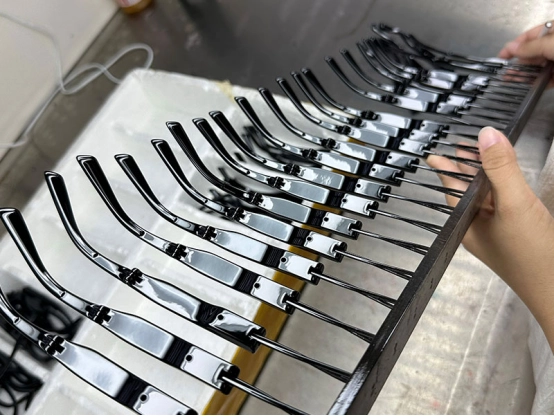
La producción de gafas incluye muchas operaciones pequeñas. El moldeado de la montura, el ensamblaje de las patillas, la instalación de las bisagras, la pintura, el chapado, el ajuste de las lentes y la aplicación del logotipo requieren atención.
Un defecto en esta etapa es más fácil de corregir que un defecto descubierto después del empaquetado.
Los puntos de control importantes incluyen:
Un problema común en la fabricación de gafas no es un fallo grave, sino una serie de pequeñas inconsistencias. Una montura puede cerrar de forma ligeramente desigual. Un logotipo puede quedar un poco demasiado alto. Una bisagra puede tener un tacto diferente en cada pieza.
Los clientes finales se fijan en estos detalles.
Los compradores deben preguntar:
SUSON integra las inspecciones de control de calidad en todas las áreas de producción, incluyendo la fabricación de monturas, patillas, pintura, bisagras, logotipos y ensamblaje. Un sistema de control de calidad en fábrica como este ayuda a identificar los problemas más cerca de su origen.
La inspección final es la última oportunidad para confirmar que los productos cumplen con los requisitos acordados antes del envío.
No se trata solo de una rápida revisión visual. Un proceso completo de control de calidad final debe incluir mediciones, comprobaciones de apariencia e inspección funcional.
Las dimensiones de las gafas deben ajustarse a las especificaciones aprobadas.
Las medidas comunes incluyen:
Para gafas personalizadasEstos detalles son especialmente importantes porque las marcas suelen desarrollar productos basándose en requisitos de ajuste específicos. Una diferencia de unos pocos milímetros puede no parecer grave durante la producción, pero puede afectar la comodidad y las opiniones de los clientes.
La inspección de apariencia normalmente abarca:
Es importante contar con condiciones de inspección controladas, ya que algunos defectos son difíciles de detectar con la iluminación normal de la fábrica.
SUSON procedimientos de control de calidad Incluye verificación dimensional e inspección visual de la superficie mediante condiciones de inspección controladas. Antes del envío, los compradores deben preguntar si el proveedor puede proporcionar informes de inspección final, fotos o videos de los productos terminados.

Las apariencias por sí solas no lo dicen todo. Dependiendo del tipo de producto y del mercado objetivo, los proveedores pueden realizar pruebas adicionales.
Algunos ejemplos comunes son:
Las pruebas de SUSON incluyen ensayos de fatiga de las bisagras y resistencia al sudor, y se basan en estándares para monturas de gafas como la ISO 12870. También se pueden organizar pruebas independientes según los requisitos del cliente. Los proveedores de gafas con experiencia deberían poder analizar las opciones de prueba en lugar de tratar todos los pedidos por igual.
Las afirmaciones sobre la calidad son más creíbles cuando están respaldadas por pruebas. Un comprador no necesita una gran cantidad de papeleo, pero varios registros son valiosos al evaluar a un proveedor.
Entre los documentos e información útiles se incluyen:
Para pedidos grandes, los compradores también pueden preguntar cómo el proveedor gestiona los niveles de defectos y los estándares de inspección. Un proceso claro de documentación de control de calidad demuestra que la calidad se controla de forma sistemática, en lugar de depender únicamente de trabajadores individuales.
Antes de realizar un pedido a un fabricante de gafas, confirme estos puntos:
Los mejores proveedores suelen responder sin problema a estas preguntas. Entienden que los compradores profesionales necesitan tener visibilidad del proceso.
ConsejoEl control de calidad se realiza manualmente, ya que lograr una perfección del 100% es difícil.
SUSON se centra en el proceso de fabricación completo, desde la inspección de materiales hasta la aprobación del producto terminado. Su producción de gafas abarca gafas de sol, monturas ópticas y proyectos personalizados OEM/ODM.
La fábrica realiza inspecciones de entrada, controles en la etapa de producción y evaluaciones del producto final. El control de calidad cuenta con el respaldo de personal especializado que trabaja en las diferentes áreas de fabricación.
¿Está planificando un proyecto de gafas de marca propia o OEM/ODM?
Contacta con SUSON para analizar las especificaciones de su producto, el mercado objetivo, los requisitos de prueba y las expectativas de control de calidad antes de que comience el muestreo.
Verifique la capacidad de producción del proveedor, su proceso de control de materiales, sus métodos de inspección, las opciones de prueba y su capacidad para proporcionar registros de control de calidad. El proveedor debe explicar cómo se gestiona la calidad durante todo el proceso de producción.
La inspección final suele incluir mediciones, alineación de la montura, aspecto de la superficie, bisagras, lentes, logotipos, embalaje y comparación con muestras aprobadas.
La inspección por terceros puede ser útil para pedidos grandes, proveedores nuevos o productos con estrictos requisitos de calidad. Proporciona un paso de verificación adicional antes del envío.