

An $8 frame can look like the safer buy until you are discounting it against several stores selling the same shape. A $12 custom frame can be just as expensive a mistake when most of the first order stays on the shelf. So before choosing private label or white label sunglasses, put the quotation beside your sales plan. How many pairs do you expect to sell at full price? What’s left after advertising, shipping and the other bills? Those answers are more useful than the cheaper unit price.
Read the specification under the label. A quote called ‘private label’ might cover nothing more than your logo on a catalog frame; elsewhere it might buy development of a new shape. Since both will carry your branding, the label won’t explain a price difference. The list of changes will.
Here, private label means making meaningful changes to a collection, beyond putting your logo on a standard frame. That could be a different material, a revised shape or an entirely new design from your drawing. None of those changes, on its own, establishes exclusivity. That’s something to agree with the manufacturer.
An existing frame may already have the fit you need, in which case the interesting question is how much of it to leave alone. You could change only the lens color. You could also ask for a different hinge, but now you’re discussing engineering as well as appearance. A quotation that breaks out each change will let you remove an expensive option without starting the whole brief again.
A useful question for a private label sunglasses manufacturer is what it would cost to change just the detail your customer cares about. Price that version first. You can still add the optional finish or special hardware, but you’ll know what you are paying for it.
With white label sunglasses, you’re choosing an existing frame that other brands may also order. Your part is usually the logo, labels and packaging, perhaps with a choice of lens colors. Don’t read ‘existing’ as ‘in stock.’ The design may be ready while the frames still have to be made, branded and packed.
These are starting points for comparing quotations, not fixed rules for every factory. In particular, check the minimum quantity and any exclusivity promise. A standard design can have an inconvenient MOQ, while a custom frame can still leave the factory free to sell related designs.
| Factor | Private Label Sunglasses | White Label Sunglasses |
| Product development | Changes to an existing frame or a new design | Existing frame with agreed branding |
| Initial investment | Development costs depend on the changes | Usually less development spending |
| Speed to market | Allow for sampling and any new tooling | Confirm stock and branding lead time |
| Brand differentiation | Depends on design and agreed rights | Shared shapes can invite price comparison |
| Design control | Defined by the development agreement | Usually limited to listed options |
| Unit cost potential | Spread development costs over realistic sales | Check volume price and finishing charges |
| Inventory risk | MOQ and untested demand can tie up cash | Still exposed to slow sales and markdowns |
| Long-term brand value | Depends on recognition and repeat demand | Brand, service and fit still matter |
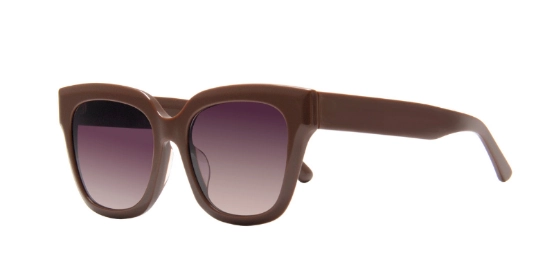
A tooling charge looks smaller when you divide it by a large order. But the factory gets paid for pairs you buy; you recover that money from pairs customers buy. For the calculation, use an achievable sales quantity and try a slower-sales version as well. The discount for a bigger batch may be real without making that batch the better purchase.
Spend a little time looking for the proposed frame where your customers shop. Suppose a shopper puts your listing beside one with almost the same shape at a lower price. What would make yours worth the difference? A distinctive detail might help answer that, whereas a supplier discount isn’t visible to the shopper at all. Whatever retail price you choose has to survive that comparison.
A headline MOQ doesn’t tell you how the order divides up. Find out the minimum for each model and color; you may be able to sell the black frame quite comfortably but struggle with the other colors needed to fill the order. The phrase ‘custom sunglasses with a low MOQ’ needs unpacking too. Does that offer buy a logo on a catalog frame, or does it include developing a tool for your shape? The quantities belong to very different jobs.
Think about the second order while negotiating the first. Can you buy the same lens and hardware again, and in what quantity? It’s frustrating to have demand for a frame but no practical way to replenish it. You also need the reorder to match the fit and finish people bought the first time.
Start with the stock you already know how to sell. If you don’t have that evidence yet, give the first order a test budget rather than your entire launch budget. You’ll still have advertising and returns to pay for, and you may need cash quickly to reorder the one style that takes off.
Think of a first seasonal order as a purchase of stock with a limited chance to sell it. There may be no useful second season for that particular shape. Unless you already have demand to support new tooling, an existing frame leaves you with less development spending to recover in that window. Sampling still matters, as do the lenses and the way your logo and packaging look together.
The word ‘available’ deserves a date and a quantity beside it. Does the supplier mean there are enough bare frames for you, or that your entire branded order can be packed on that date? Work through the remaining steps before putting a launch date on the calendar.
A small number of well-chosen styles gives the first order a clearer purpose. You can see what sells without dividing the budget into lots of tiny bets. Include an allowance for discounts when setting prices against similar listings, and choose a reorder point in advance. Waiting until a style has sold out can leave you paying to promote something customers can’t buy.
For a boutique collection, imagine the sample next to frames that shop already stocks. A particular acetate profile or hardware detail might be the reason yours belongs there. If that is the feature the buyer responds to, it is also the feature worth costing properly, with suitable fit and finishing. Spending on unrelated custom parts won’t necessarily improve that decision for the buyer.
A development brief can be quite modest. Perhaps you’re responding to repeated fit comments or to a retailer asking about a shape. Take that specific request into the sampling discussion and get the required work priced. You’ll be discussing an identifiable alteration, with a tooling cost and minimum quantity, instead of trying to cost a general ambition to move upmarket.
There is some contract work to do alongside the sample. The mold you pay for and the design it makes both need ownership terms, with a description of any exclusive rights you are buying. Otherwise ‘custom’ may mean less than you expect when the next buyer talks to the same factory. Even an exclusive frame needs a retail price customers will accept.
Use net selling revenue after discounts and refunds. Subtract the landed product cost, then selling costs such as payment fees, fulfillment, returns handling and customer acquisition. Allocate development costs separately. This gives a contribution figure for comparing the two routes; operating overhead and taxes still need to be covered.
Here is a hypothetical planning example using the $8 white label and $12 private label factory prices. Assume one pair per order and that all 500 pairs in each scenario sell at the net prices shown.
| Per pair unless stated | White label | Private label |
| Net selling revenue | $30 | $45 |
| Factory price | $8 | $12 |
| Freight, duties and packaging | $4 | $5 |
| Landed product cost | $12 | $17 |
| Payment fees, fulfillment and returns handling | $4 | $6 |
| Customer acquisition | $8 | $9 |
| Contribution before development allocation | $6 | $13 |
| Development budget for this example | $0 | $3,000 |
| Development cost per pair at 500 pairs sold | $0 | $6 |
| Contribution after development allocation | $6 | $7 |
| Contribution as a share of net revenue | 20.0% | 15.6% |
After development, the custom pair is ahead by only $1 in this example. An extra dollar spent acquiring the customer would use up that advantage. The $45 selling price therefore needs more than optimism behind it. If you haven’t sold at that level, retailer feedback or a small measurable launch would give the calculation a firmer starting point.
Now change the sales assumption to 250 pairs. The $3,000 development bill becomes $12 per pair, leaving just $1 contribution on the same other figures. You’ll still have money tied up in any unsold stock. There’s another detail in the table worth checking: the private label pair leaves more dollars at 500 sales, but its contribution percentage is lower, 15.6% against 20.0%.
For a SUSON quotation, it is worth pricing an available material or simpler finish beside the original specification. Keep any change subject to sample approval. A named lens or material brand needs a written confirmation too, if you’re planning to mention it to your customers. Discussion of an available option doesn’t establish what will be fitted to this order.

The quotations may arrive in different formats, but you should still be able to find your specified lenses, material and branding in every one. If the case is missing from one offer, have it priced before treating the total as cheaper. Once you’ve chosen the version to make, retain its approved sample and written specification. They are what the delivered order will be checked against.
For an eyewear OEM/ODM inquiry to SUSON in China, a picture is a starting point. Add the quantity and selling price you are working toward, and request a version using an existing frame as well as the custom proposal. Have development and packaging listed separately in both. Then you can put the two offers into the same calculation instead of trying to explain the difference between two unexplained totals.
Before asking for another quotation, put your own answers to these questions on paper:
A launch date can make part of the decision for you. Once the sample checks, branding and delivery are allowed for, there may simply be no time left to develop tooling. That still doesn’t justify skipping fit or lens checks on an existing design. With more time available, you can investigate a custom frame, but the sales assumption deserves as much attention as the production schedule.
A mixed range is another possibility. There may be perfectly useful standard frames that you have no reason to stop ordering. Their sales and fit feedback can help you choose the next development project, while they continue earning revenue. You can give a custom version a specific job without replacing the whole collection.
Go back to the order you could afford if sales were slower than planned. After paying for it, how much money would remain for marketing and another batch of the good seller? Now do the same exercise for the larger order with the lower unit price. If that second version uses up the cash you need to keep selling, the unit-price saving hasn’t answered the main concern.
Send SUSON your shortlist with quantities by model and color, your intended retail price and launch date. Ask for samples, tooling, packaging and reorder terms to be priced alongside the frames. With an existing-frame version and a custom version of the brief, you’ll have figures you can put into your own calculation.
It can be a larger initial commitment because sample work, tooling and special components have to be funded. Then there is the question of how many sales will repay that work. Our hypothetical $3,000 bill amounts to $6 on each of 500 pairs sold, or $12 on each of 250. Neither calculation changes the tool; it changes the burden on each sale.
Yes, subject to what the selected frame permits. A printed logo and an engraved one won’t suit every surface in the same way, so get the chosen treatment sampled and its minimum quantity confirmed. Cases and labels may need separate minimum quantities as well.
For a first demand test, an existing frame keeps one expense out of the way: developing a new design. Before ordering, do the arithmetic with its actual MOQ, freight and selling costs, and check what similar frames sell for. The absence of a tooling bill won’t rescue an unworkable retail price.
Yes, some suppliers have a catalog range as well as development services. You can ask the same business for both prices, but get the sampling and quantity requirements for each. Find out where partner facilities are involved as well. OEM and ODM describe routes to a product; the quotation should explain the actual arrangement you’re buying.