
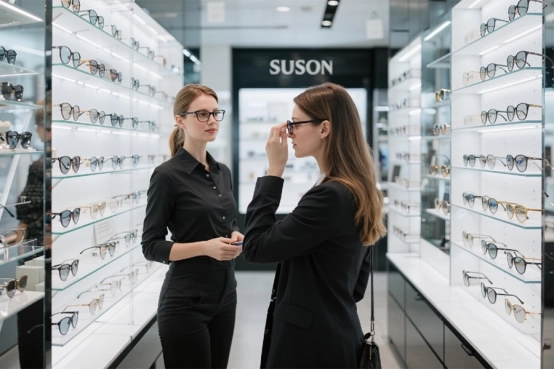
Выбор подходящего производителя очков на заказ – это не просто погоня за самой низкой ценой на заводе. Очень низкая цена может показаться привлекательной на первый взгляд.
Однако проблемы часто проявляются позже.
К таким факторам могут относиться неравномерное качество, задержки поставок, неясное происхождение материалов или товары, не соответствующие рыночным стандартам. Для производителей очков, розничных продавцов и импортеров успех проекта обычно определяется четырьмя основными моментами: минимальным объемом заказа (MOQ), сроками поставки, контролем качества и соответствием стандартам.
Профессиональный производитель очков должен заниматься не только сборкой продукции.
Партнер, предоставляющий полный спектр производственных услуг, должен оказывать поддержку на всех этапах: от разработки дизайна и выбора материалов до изготовления пресс-форм, отбора образцов, индивидуальной настройки, серийного производства, контроля качества, упаковки и экспорта.
Эта поддержка имеет огромное значение. Производство очков включает в себя множество мелких деталей. Оправа может казаться простой на первый взгляд. Тем не менее, такие элементы, как конструкция шарнира, посадка линз, отделка поверхности и стабильность материала, могут существенно повлиять на качество готового изделия.
Сотрудничество с производителем, который управляет большим количеством этапов производства на собственных мощностях, часто позволяет сократить количество ошибок в коммуникации и снизить производственные риски.
OEM и ODM Это хорошо известные термины в сфере закупок очков. Они обозначают два разных способа взаимодействия.
OEM-производство означает, что покупатель предоставляет дизайн, технические характеристики или детали продукта. Затем производитель изготавливает изделия в точном соответствии с этими инструкциями. Известные бренды со своими собственными командами разработчиков часто предпочитают этот подход.
ODM-производство предполагает более активную поддержку со стороны производителя в процессе разработки. Завод может помочь улучшить дизайн, порекомендовать материалы, разработать образцы и скорректировать продукцию на основе своего производственного опыта.
Для новых брендов очков ODM может сократить время, необходимое для освоения новых технологий. Для брендов с устоявшимся дизайном OEM предоставляет больший контроль.
Минимальный объем заказа (MOQ) обычно является одним из первых вопросов, которые задают покупатели. Однако ответ на него во многом зависит от уровня индивидуализации заказа.
Для каждого проекта по изготовлению очков на заказ не существует единого минимального объема заказа.
Разные проекты требуют разных производственных обязательств:
Покупателям всегда следует уточнять, как рассчитывается минимальный объем заказа (MOQ).
Поставщик может указать минимальный объем заказа в 500 штук, но это может означать 500 штук на цвет или на модель, а не весь заказ целиком. Эта деталь влияет на планирование запасов, особенно для брендов, выпускающих несколько новых моделей.

Сроки выполнения производственного заказа часто понимаются неправильно. Завод может предоставить предварительную оценку сроков производства, но она не всегда включает в себя утверждение проекта, отбор образцов или подготовку материалов.
Реалистичный график охватывает весь процесс.
Изготовление очков на заказ обычно включает в себя:
Типичная ситуация — это подготовка брендом сезонной коллекции. Если утверждение образцов занимает больше времени, чем ожидалось, весь график запуска может быть сдвинут.
Небольшие изменения могут привести к задержкам. Другой цвет линз, новое расположение логотипа или измененный размер оправы могут потребовать дополнительного времени на производство. Опытные закупщики обычно обсуждают сроки поэтапно, а не спрашивают только: «Сколько дней потребуется на производство?»
Контроль качества — одно из главных отличий профессионального производителя очков от обычного поставщика.
Проверять продукцию только после завершения производства недостаточно. Проблемы проще и дешевле устранить на ранней стадии.
Полный процесс контроля качества обычно включает три этапа.
Входной контроль
Перед началом производства необходимо проверить материалы и комплектующие:
Контроль в процессе производства
В процессе производства инспекторы должны контролировать:
Заключительная проверка
Перед отгрузкой готовую продукцию следует проверить на внешний вид, функциональность, количество и соответствие упаковки.
Компания SUSON применяет контроль качества на всех этапах производственного процесса, включая проверку материалов, контроль на этапах производства и оценку готовой продукции. Контроль качества Инспекторы размещены по всему производственному цеху SUSON, и примерно 15% сотрудников фабрики занимаются контролем качества. Для брендов, создающих долгосрочные коллекции, стабильное качество между различными производственными партиями зачастую важнее, чем успешный первый заказ.
Вопросы соответствия требованиям следует рассматривать до начала производства, а не после завершения изготовления продукции.
Требования различаются в зависимости от типа продукции и рынка сбыта. Производитель должен понимать, какие документы и испытания необходимы для целевого региона покупателя.
Покупателям, ориентирующимся на рынок США, следует ознакомиться с требованиями к солнцезащитным очкам, оправам и линзам для очков.
В зависимости от продукта, производителям может потребоваться предоставить подтверждающую документацию, касающуюся регистрации, испытаний и применимых требований безопасности.
Ударопрочность линз является важным фактором для некоторых моделей очков.
Для европейского и британского рынков покупателям следует уточнить требования, исходя из конкретной категории их продукции.
Важные области включают:
Распространенная ошибка — предположение, что один сертификат автоматически охватывает все рынки. Документы, подтверждающие соответствие требованиям, должны соответствовать фактическому продаваемому продукту.

Сравнивать производителей только по цене может привести к неверным решениям в выборе поставщиков.
Более тщательная оценка должна включать в себя:
СУСОН Компания предоставляет услуги OEM и ODM по производству очков, включая поддержку дизайна, изготовление образцов, производство, контроль качества, упаковку и доставку. Для брендов, планирующих непрерывный запуск новых продуктов, комплексный производственный процесс от производителя обычно более ценен, чем разовое предложение с низкой ценой.
Перед началом сотрудничества покупателям следует задать следующие вопросы:
Эти вопросы позволяют понять, как производитель действует за пределами коммерческого предложения.
Поставщик, успешно выполняющий небольшой заказ, может столкнуться с другими проблемами при увеличении объёма производства.
Для растущих брендов необходима стабильность при повторных заказах. Необходимо поддерживать одинаковую форму оправы, цвет, качество отделки и стандарты упаковки.
Компания SUSON насчитывает более 600 производственных рабочих, ежемесячная производственная мощность превышает 600 000 единиц, а также имеет опыт поддержки проектов по изготовлению очков на заказ для международных рынков.
Перед выбором поставщика проверьте следующее:
Самая низкая цена не всегда означает самые низкие затраты. Проблемы и задержки в производстве обычно приводят к более значительным расходам в дальнейшем.
Выбор производителя очков на заказ требует учитывать не только цену. Минимальный объем заказа, производственные возможности, контроль качества и соответствие стандартам — все это влияет на успех коллекции очков.
SUSON оказывает поддержку брендам с помощью OEM и ODM решения Проект охватывает проектирование, отбор образцов, производство, контроль качества, упаковку и экспорт. Четкое понимание концепции продукта, целевого рынка, ожидаемого объема и требований к дизайну является основой для успешного проекта.
Планируете новую коллекцию очков?
Отправьте в компанию SUSON информацию о вашем целевом рынке, эталонный дизайн, ожидаемое количество и дату запуска, чтобы обсудить наиболее подходящее решение для OEM- или ODM-производства.
Минимальный объем заказа зависит от уровня индивидуализации. Для существующих оправ с простым брендированием обычно требуются меньшие объемы, в то время как для полностью индивидуализированных дизайнов необходимы более высокие обязательства.
Сроки изготовления зависят от утверждения проекта, выбора материалов, отбора образцов, сложности изготовления, контроля качества и доставки.
Требования зависят от целевого рынка и типа продукции. Покупателям следует уточнить конкретные виды испытаний и необходимые документы.
OEM-производство ориентировано на выпуск продукции в соответствии с проектом покупателя. ODM-производство включает дополнительную поддержку в разработке продукта со стороны производителя.