
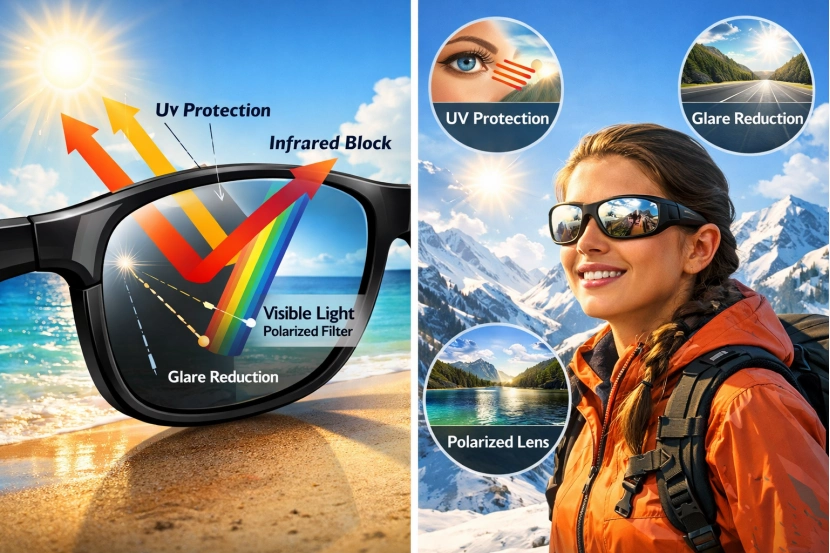
Światło działa w niesamowity sposób, gdy uderza w ludzkie oko. Okulary słoneczne są wykonane tylko po to, aby poradzić sobie z tym spotkaniem. Nie tylko sprawiają, że wyglądasz fajnie. Pracują nad podstawowymi pomysłami optycznymi, które kontrolują, ile i jaki rodzaj światła dostaje się do sietnicy. Krótko mówiąc, okulary przeciwsłoneczne działają przez pochłanianie, odbicie i filtrowanie określonych długości fal. Ochronia oczy przed szkodą. Jednocześnie zwiększają łatwość wizualną.
Zanim przejdziemy do nauki, jak one działają, pomaga wiedzieć, dlaczego okulary przeciwsłoneczne mają tak duże znaczenie.
Okulary przeciwsłoneczne Służyć jako strażnik między oczami a światem wokół siebie. Zatrzymują błysk. Wyfiltrują również złe promieniowanie, które prowadzi do szybkiego dyskomfortu lub trwałych uszkodzeń. Jasne słońce odbijające się od rzeczy takich jak woda lub śnieg może przeciągnąć wzrok. To sprawia, że twoje oczy mrzią i wyczerpują się. Okulary przeciwsłoneczne zmniejszają to silne światło. Utrzymują więc łatwe widzenie nawet w trudnym świetle.
Kiedy światło staje się zbyt jasne, nasze oczy zamykają się trochę, aby zmniejszyć ekspozycję. Spowoduje to zmęczenie z czasem. Dobre okulary zmniejszają to wieczorem jasność i kontrast w naturalny sposób. Z mniejszym mrzyszczeniem jest mniej pociągnięcia mięśni twarzy. Masz ostrzejszy, spokojniejszy widok. Pomaga to bardzo w zadaniach na zewnątrz, takich jak jazda lub piesze spacery. Tam potrzebujesz stałej koncentracji.
Aby zrozumieć, jak okulary przeciwsłoneczne chronią wzrok, zacznij od poznania rodzajów światła, które uderzają w nasze oczy każdego dnia.
Promieniowanie UV ma wpływ na zdrowie oczu. Zbyt dużo przyspiesza starzenie się wewnętrznych części, takich jak soczewka. Dotyka również zewnętrznej skóry, takiej jak powieki. To zwiększa szanse na problemy, takie jak oparzenia rogówki (zapalenie fotokeratyki) i zaćmy. Zaćmy chmury i rozmycie wzroku w miarę upływu czasu. Okulary przeciwsłoneczne odporne na UV400 To znacznie zmniejsza ryzyko. Dobrze filtrują wszystkie fale do 400 nm.
| Rodzaj promieniowania | Zakres długości fali | Główny wpływ na oczy |
| UVA | 315–400 nm | Starzenie się tkanek ocznych |
| UVB | 280–315 nm | Uszkodzenia rogówki |
| Światło widzialne | 400–700 nm | Umożliwia widzenie, ale powoduje odblaski |
| Podczerwień | > 700 nm | Nagromadzenie ciepła |
Podstawowe pomysły dotyczące funkcjonowania okularów przeciwsłonecznych koncentrują się na trzech kluczowych sposobach optycznych: absorpcji, odbicie i polaryzacji.
Materiały soczewkowe, często poliwęglan lub szkło, są zbudowane, aby celowo pochłaniać pewne fale. Umniejszają więc złe promieniowanie bez zbyt dużego zakłócania normalnych widoków kolorowych. Inteligentna para utrzymuje równomierną absorpcję. Kolory pozostają prawdziwe, ale łatwe na długie wyglądy.
Soczewki powlekane odbijają dodatkowe światło od oczu. Powstrzymują się od rozprzestrzeniania się wewnątrz. Pomaga to wiele, gdy napotykasz błyszczące plamy, takie jak śnieżne pola lub mokre ścieżki po deszczu. Takie powłoki również dodają ładny wygląd. Ponadto zwiększają one jasność poprzez zmniejszenie efektów bladzenia wzroku.
Filtry polaryzowane są jednym z najlepszych nowych pomysłów w produkcji okularów. Zatrzymują światło, które odbija się płasko, główną przyczyną odblasku, z gładkich plam, takich jak woda lub szklane ściany. Z tego powodu soczewki polaryzowane znacznie zaostrzają kontrast i poczucie głębokości. Doskonale nadają się do gier na świeżym powietrzu lub jazdy w jasnym słońcu.
Nowa technologia przekształciła te pomysły optyczne w prawdziwe części w wielu rodzajach okularów przeciwsłonecznych.
Nazwa „UV400” oznacza soczewki, które zatrzymują wszystkie promienie ultrafioletowe do 400 nanometrów długości fali. To w pełni obejmuje zarówno UVA, jak i UVB. Okulary przeciwsłoneczne polaryzowane UV400 Mieszać to z filtrami polaryzacyjnymi. Dają pełną ochronę przed promieniowaniem. I utrzymują ostry wzrok.
Soczewki te używają małych filtrów pionowych. Usuwają odblaski, które dobrze odbijają się bocznie. Są przydatne do zadań o błyszczących powierzchniach, takich jak jazda łodzią, wędkarstwo lub narciarstwo. Tam najwięcej liczy się dokładny widok.
Powłoki lustrzane używają cienkich warstw metalu na zewnątrz soczewki. Wysyłają dodatkowe słońce z powrotem. Poza stylem kosmicznym spadają przychodzącą jasność dużo w miejscach o wysokim połysku, takich jak plaże lub piaszczyste obszary.
Technologia fotochromiczna pozwala soczewkom samodzielnie zaciemnić, gdy uderzają w nie promieniowanie UV. Znowu wchodzą do środka. Ten zmieniający się odcień daje prawdziwą łatwość ludziom, którzy często przechodzą między światłymi plamami. Nie potrzeba dodatkowych par.
Powłoki antyrefleksyjne zmniejszają odbicie wewnątrz soczewki. Zwiększa to jasność, głównie pod sztucznymi światłami lub świeceniem ekranu. Jest to cichy, ale silny sposób na złagodzenie zmęczenia podczas długiego zużycia.
Wybieranie odpowiednich okularów oznacza więcej niż tylko przyglądanie się. Musisz dopasować cechy soczewki do tego, co planujesz zrobić.
Soczewki poliwęglanowe ważą niewiele, ale wytrzymują uderzenia. Pasują do codziennego użytku lub sportu, w którym twarda konstrukcja pokonuje idealny wzrok. Szklane soczewki zapewniają lepsze widoki. Ale ważą więcej i łatwiej się złamają. Pasują do ludzi, którzy cenią jasne obrazy nad siłą.
Kolor soczewki kształtuje zarówno wygląd, jak i użycie:
Twój wybór odcieniu zależy od smaku plus zadania. Na przykład brązowy pomaga w górskich miejscach ze zmieniającymi się widokami. Grey najlepiej nadaje się do jazdy miejskiej.
Szeroka ramka zatrzymuje promienie boczne dobrze. Zakrzywione strony blokują zbłąkane słońce przed ukrywaniem się w pobliżu uszu lub policzków. Ciężkie dopasowanie utrzymuje je w stałym ruchu. Unika bolesnych plam. Ta mała rzecz podnosi wiele pracy na zewnątrz.
Okulary przeciwsłoneczne wykraczają poza tylko dodatki. Działają jako precyzyjne narzędzia, które chronią zdrowie oczu za pomocą inteligentnej optyki. Tylko ciemny odcień nie oznacza bezpieczeństwa. Może zmniejszyć światło widoczne, ale pominąć złe fale. Prawdziwa ochrona pochodzi z sprawdzonej technologii filtru UV, jak w okularach przeciwsłonecznych odpornych na UV400. Blokują wszystko bez względu na głębokość cienia.
SUSON jest wybitnym producentem, który przestrzega zasad inżynierii optycznej, integrując modne innowacje i precyzję naukową w każdej linii produktów, mając na celu zapewnienie niezawodnych rozwiązań ochrony oczu na rynku światowym.
Aby doświadczyć doskonałego połączenia stylu i ochrony oczu, nie szukaj dalej niż premium gama okularów przeciwsłonecznych polaryzowanych UV400 firmy SUSON. Kontakt Susan dzisiaj i wybierz idealną parę, która odpowiada twoim potrzebom, czy to’ dla sportów na świeżym powietrzu, jazdy lub po prostu cieszyć się słonecznym dniem.
Oznacza to, że soczewki blokują wszystkie promienie ultrafioletowe do 400 nanometrów, pokrywając całkowicie zarówno widma UVA, jak i UVB.
Tak, ponieważ filtry polaryzowane eliminują odblaski z płaskich powierzchni odblaskowych, takich jak woda lub drogi, aby zapewnić jaśniejsze widzenie na zewnątrz.
niekoniecznie; Tylko certyfikowane soczewki ochronne przed promieniowaniem UV, takie jak soczewki UV400, gwarantują pełną ochronę przed szkodliwym promieniowaniem.
Soczewki fotochromiczne automatycznie dostosowują odcień w zależności od intensywności światła, podczas gdy polaryzowane specjalnie zmniejszają odblaski poprzez filtrowanie poziomych odblasków.
Odbarwienia szarości są idealne, ponieważ utrzymują naturalną równowagę kolorów, jednocześnie zmniejszając ogólną jasność wygodnie w większości środowisk.