
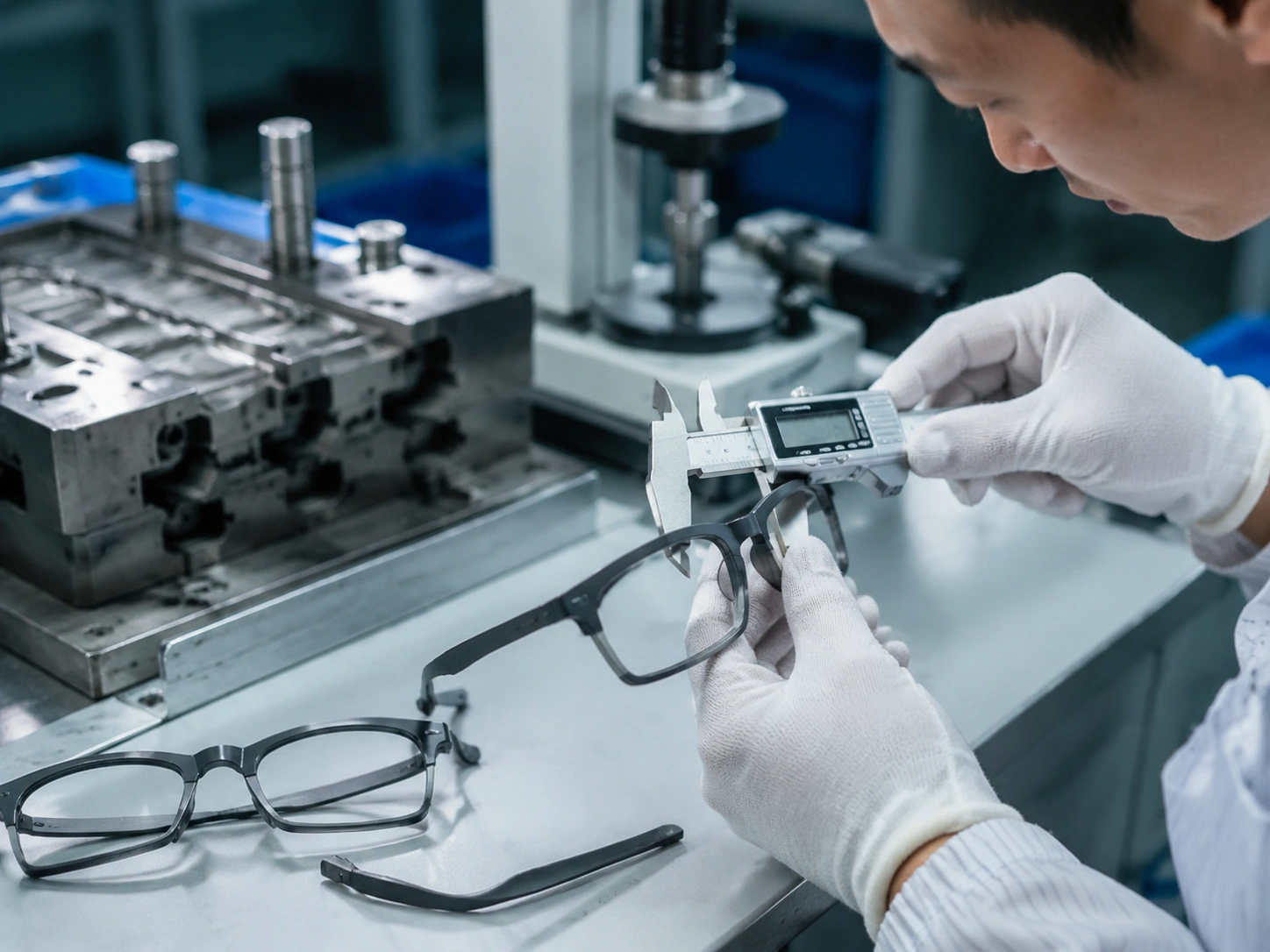
حتى المواد عالية الجودة قد تتشوه أو تفقد متانتها إذا لم يتم التحكم في ظروف الإنتاج بشكل صحيح. إن فهم خصائص مادة TR90 تحت الضغط، وكيف يؤثر قولبة الحقن على أدائها، وما هي فحوصات الجودة التي يمكن أن تمنع التشوه، يساعد في الحفاظ على استقرار وموثوقية شكل الإطار.
مادة TR90 هي مادة لدن حراري معروفة بمزيجها من المرونة والمتانة وخفة الوزن. يسمح تركيبها بتحمل الضغط دون أن تنكسر، ولهذا السبب تُستخدم في العديد من إطارات النظارات عالية الأداء. تتميز هذه المادة بكثافة منخفضة، مما يجعل الإطارات خفيفة على الوجه مع الحفاظ على متانتها العالية.
ومن أهم مميزاته الأخرى مقاومته العالية لتغير الشكل الناتج عن الضغط والحرارة. فحتى في درجات الحرارة المرتفعة الناتجة عن الاستخدام اليومي أو التخزين، يحافظ TR90 على حجمه بشكل أفضل من معظم أنواع البلاستيك الأخرى. تسمح مرونته للإطار بالانحناء قليلاً تحت الضغط ثم العودة إلى شكله الأصلي، مما يُسهم في راحة الاستخدام وإطالة عمر المنتج.
تُسخّن هذه العملية حبيبات TR90 حتى تذوب، ثم تُدفع في قوالب دقيقة، ثم تُبرّد حتى تتصلب. وتؤثر جودة هذه الخطوة على شكل الإطار وتشطيب السطح. يمنح قولبة الحقن نفس الشكل لآلاف الوحدات، ويتيح تصميمات دقيقة يصعب تحقيقها بطرق أخرى.
مع ذلك، تتطلب إعدادات مثل درجة الحرارة والضغط وسرعة التبريد تحكمًا دقيقًا. فسوء التحكم قد يؤدي إلى تراكم إجهاد خفي أو تفاوت في الكثافة داخل الهيكل، وهي علامات مبكرة على احتمال ظهور تشوه لاحقًا.
قد يبدأ التشوّه في نقاط عديدة، سواء أثناء التصنيع أو بعده. ويساعد تحديد الأسباب على تجنب المشاكل المكلفة.
غالباً ما يتسبب التبريد غير المتساوي في تغيير شكل إطارات النظارات المصنعة بالحقن. فعندما تبرد أجزاء القالب بسرعات مختلفة، يتراكم التوتر داخل المادة. ومع مرور الوقت، يتلاشى هذا التوتر بشكل غير متساوٍ، مما يؤدي إلى التواء الإطار أو انحنائه.
يُعدّ تصميم القالب عاملاً بالغ الأهمية. فعدم محاذاة نصفي القالب أو وضع البوابة في غير موضعها الصحيح قد يُؤدي إلى تدفق غير منتظم، ما يُسبب اختلالاً في توازن القطعة بعد تبريدها. كما تُعدّ الرطوبة عاملاً آخر يُغفل عنه بسهولة. فإذا لم تُجفف حبيبات TR90 الخام جيداً قبل التشكيل، فقد تتشكل جيوب بخارية أثناء التسخين، ما يُؤدي إلى تغييرات طفيفة في الشكل بعد التبريد.
حتى الإطارات المصنوعة جيدًا قد تتعرض للتشوه لاحقًا في ظروف سيئة. الحرارة العالية أثناء الشحن أو التخزين قد تُليّن مادة TR90 قليلًا، خاصةً مع ضغط مواد التغليف. التعرض الطويل للأشعة فوق البنفسجية قد يُضعف سلاسل البوليمر تدريجيًا بالقرب من السطح ويُغير من قوتها على مدى شهور أو سنوات.
كما أن طريقة التعامل مع المنتج لها أهمية أيضاً. فوضع الصناديق الثقيلة فوق إطارات غير محمية أو ثني أذرع النظارة أثناء التجميع قد يؤدي إلى إجهادها مما يغير شكلها لاحقاً.

يُجنّب اكتشاف عيوب النظارات مبكراً وصول المنتجات الرديئة إلى المشترين. ويستخدم صانعو النظارات المخصصة عدة فحوصات بسيطة:
تجمع هذه الفحوصات بين المراجعة البصرية والقياس الدقيق لإجراء تقييم كامل.
بعد إجراء فحوصات الشكل، تؤكد الاختبارات الميكانيكية أن إطارات النظارات تلبي احتياجات الاستخدام الحقيقية.
يُظهر اختبار الانحناء مدى قدرة الإطار على الانحناء دون تغيير دائم. وهذا مهمٌّ للأذرع التي يجب أن تعود بسلاسة بعد الاستخدام اليومي. تحاكي اختبارات الصدمات السقوط أو الصدمات المفاجئة التي تحدث في الحياة الواقعية. يتحقق اختبار الشد من المرونة عن طريق شد العينات إلى نقطة الخضوع.
| نوع الاختبار | غاية | المؤشر الرئيسي |
| اختبار الانحناء | يقيس مدى تحمل الانحناء | معدل الاسترداد المرن |
| مقاومة الصدمات | يحاكي السقوط/الانحناء | البقاء على قيد الحياة بدون كراك |
| اختبار الشد | يقيس مرونة التمدد | استطالة الخضوع |
إلى جانب الاختبارات المعملية، هناك بعض العلامات العملية التي تخبرنا بالكثير عن الجودة:
تخضع كل خطوة، بدءًا من تجفيف المواد الخام وحتى التجميع النهائي، للفحص وفقًا لقواعد تصنيع المعدات الأصلية/تصميم المعدات الأصلية. ويتم أخذ عينات عشوائية من كل دفعة للتحقق من عدم وجود تشوه أو ضعف في المتانة قبل الشحن. كما يساعد المصنّعون العملاء على اختيار درجة TR90 المناسبة للغرض المطلوب، سواءً كانت نظارات رياضية تتطلب متانة إضافية أو نظارات قراءة خفيفة تركز على الراحة.
تُسهم الأبحاث المستمرة في تحسين تركيبات البوليمر لزيادة ثباتها الحراري وتقليل التمدد والانكماش بمرور الوقت. كما تُساعد التغييرات في تفاصيل التصميم، مثل موضع المفصلات أو سُمك الذراعين، على توزيع الإجهاد بالتساوي على الإطار. هذه الخطوات، إلى جانب العمل الدؤوب في مجال البحث والتطوير، تُلبي المعايير البصرية الدولية التي تتوقعها الأسواق الاحترافية.
يعمل TR90 بشكل جيد في أنواع عديدة من النظارات:
يستفيد كل استخدام من مزيج الصلابة والمرونة في مادة TR90، وهذا هو السبب في أنها تقود صناعة النظارات الحديثة اليوم.
إن اختيار المصنّعين ذوي الخبرة لا يقتصر على السعر فقط. فالفرق الماهرة تُعدّل إعدادات الحقن، مثل منحنيات درجة الحرارة، لكل تصميم على حدة لضمان تدفق جيد للمواد وتقليل الإجهاد المتبقي. كما أن العناية المنتظمة بالقالب تمنع مشاكل الشكل التي قد تؤثر سلبًا على الملاءمة أو التوازن لاحقًا. ويساهم التعاون بين مهندسي التصميم وفريق الإنتاج في التحسين المستمر لكل دفعة.
سوسون نقدم خدمات تصنيع المعدات الأصلية/تصميم المنتجات الأصلية المتكاملة، بدءًا من تصميم النماذج الأولية وصولًا إلى الإنتاج الضخم. تخضع منتجاتنا لاختبارات دقيقة في مختبراتنا للتأكد من متانتها الميكانيكية، وتوازنها المريح، وموثوقيتها الشاملة قبل شحنها إلى عملائنا حول العالم. يأتي الأداء المتميز لمجموعاتنا المخصصة من خلال التحكم الدقيق في عمليات التصنيع، وليس من قبيل الصدفة. وهذا دليل واضح على جودة صناعة النظارات المخصصة اليوم.
Q1: ما الذي يميز مادة TR90 عن البلاستيك العادي المستخدم في صناعة النظارات؟
يوفر TR90 مرونة عالية إلى جانب صلابة خفيفة ومقاومة أفضل للحرارة مقارنة بالبلاستيك الشائع مثل البولي كربونات أو الأسيتات.
Q2: كيف يمكنني معرفة ما إذا كانت نظارتي معوجة؟
ضعها بشكل مسطح على طاولة. إذا ارتفع أحد ذراعي النظارة أو بدت العدسات غير متوازنة، فقد يكون الإطار به انحناء طفيف.
Q3: هل يمكن أن تتسبب الحرارة العالية في تلف دائم لإطارات TR90؟
نعم. التعرض الطويل لدرجة حرارة أعلى من 80 درجة مئوية يمكن أن يلين المادة بما يكفي لإحداث تغيير دائم في شكلها، على الرغم من أن الحرارة القصيرة عادة لا تسبب ضرراً كبيراً.
Q4: هل الإطارات المصنعة بالحقن أقوى من تلك المصنوعة يدوياً؟
تُعطي عملية التشكيل بالحقن كثافةً وشكلاً أكثر تجانساً. ومع ذلك، لا تزال المتانة تعتمد على دقة تصميم القالب والتحكم في التبريد.
Q5: لماذا يقوم المصنعون المحترفون باختبار كل دفعة بدلاً من الاعتماد على الفحوصات العشوائية فقط؟
قد تؤثر التغيرات الطفيفة في درجة الحرارة أو الرطوبة أثناء الإنتاج على جودة الإطار. ويضمن الاختبار الشامل أن كل طلب يفي بالمعايير المحددة للسلامة والاستخدام الموثوق.