
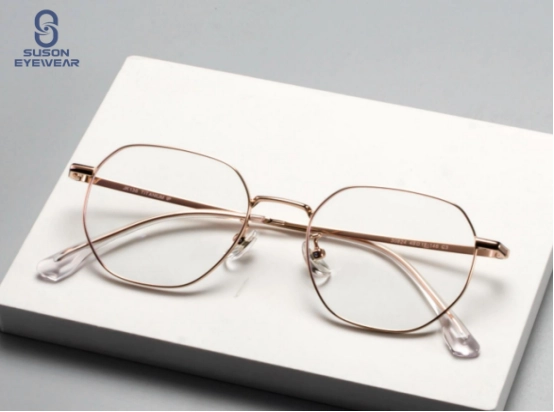
Two titanium frames can look almost identical and still carry very different factory prices. Material grade, wall thickness, welding difficulty, hinge choice, finishing, order volume, and inspection standards all enter the quote.
Titanium costs more before production begins. The raw material is pricier than common stainless steel, and it is less forgiving during forming, welding, and finishing.
A steel temple may tolerate a small process variation. A thin titanium temple can twist, spring back, or lose alignment when heat control is poor. That means better fixtures and experienced technicians.
The wearer notices the result later: low weight, corrosion resistance, and comfort during long use. For optical frames worn all day, a few grams matter. Buyers notice when pressure builds behind the ears.
“Titanium frame” is not a complete material description. A useful quotation should state the grade, which components use it, and whether other metals are included.
Pure titanium is dependable for lightweight, corrosion resistant optical frames. It works well in clean commercial designs.
Consistency matters more than a premium label. Changing material sources between batches can alter spring, weight, and fit.
Beta titanium is selected where flexibility matters. Thin temples and flexible bridges benefit from its spring performance.
It costs more to handle well. Paying for it makes sense when the structure uses that property. In a thick decorative part, it may add cost without value.
Mixed construction is common and not automatically inferior. A frame may use titanium for the front, beta titanium for the temples, and stainless steel for small hardware.
| Material Option | Main Characteristic | Typical Cost Impact | Best Suited For |
| Pure titanium | Lightweight and corrosion resistant | Medium to high | Everyday premium optical frames |
| Beta titanium | Flexible and resilient | High | Thin temples and comfort focused designs |
| Mixed material construction | Balances cost and performance | Low to medium | Commercial collections and entry level lines |
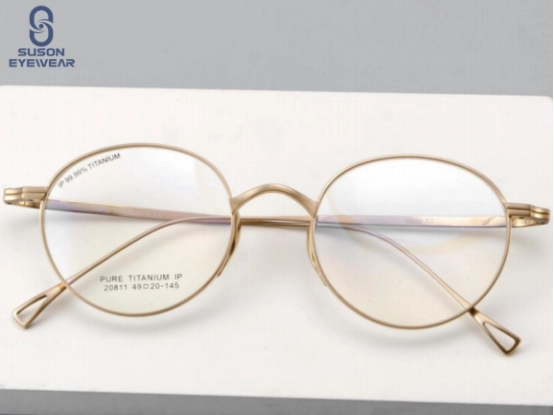
Material sets the starting point. Design decides how difficult that material is to turn into a stable frame.
Thin rims, deep lens shapes, sharp corners, and unusual curves increase process sensitivity. Semi-rimless and rimless structures bring different drilling and assembly requirements. Thin full rim fronts often need better forming control than heavier designs.
A common sample issue is symmetry. One lens shape may sit slightly higher although the CAD drawing is correct. Forming stress, welding sequence, or weak fixture control can cause it.
Standard barrel hinges are economical. Spring hinges add parts, assembly time, and another failure point. They help only when the customer needs extra opening range.
Multi-part temples allow decorative inserts but create more joints and inspection points.
Nose pads look minor. They are not. Pad-arm angle, silicone hardness, and screw quality directly affect comfort and complaints.
Custom end pieces, bridge parts, hinges, or logo plaques usually require tooling. Revisions add cost.
For a small launch, modifying an existing structure is sensible. Exclusive components suit longer running collections. The volume must justify them.
Cutting and forming establish geometry. Welding holds it. Polishing and finishing help justify the retail price.
Good welding is not only about strength. Heat marks, uneven joints, and excess filler become obvious after plating. A clean joint needs less grinding and preserves geometry.
Surface finishing deserves close attention. A color sample can look excellent and fail after months of sweat, skin oil, and cleaning. Buyers should ask how the finish is applied and whether the approved sample uses the mass production process.
Final alignment is worth paying for. Premium packaging cannot rescue a frame that rocks on a flat surface.
MOQ is partly a production question and partly cost allocation. Tool setup, color preparation, line adjustment, and packaging work exist even when the order is small.
A low MOQ is useful for market testing. It is not the same as the lowest unit price. A defined OEM/ODM eyewear production process helps buyers understand which development costs occur before bulk production.
Inspection is cheaper than rework and freight claims, though not every step has equal value.
Material identity, dimensions, hinge movement, welding strength, and frame symmetry should be checked during production.
Inline checks catch problems while correction is possible. Once 3,000 frames have been plated, a small alignment error becomes an expensive discussion.
Surface scratches, color variation, screw tightness, and temple opening force need defined limits. “Looks acceptable” is not a useful standard.
A confirmed pre-production sample gives the line a physical reference. It should include the approved color, logo position, dimensions, components, and packaging.
Final inspection should verify that production matches it. Stable repeat orders may use random sampling. New designs or complex finishes deserve tighter control.
Required test reports and labeling should be agreed before production. Discovering a market specific requirement after packing still happens.
The safest savings usually come from reducing complexity.
Cutting inspection may reduce the invoice but moves cost downstream.
A unit price without a technical breakdown is not enough. Compare quotes line by line.
Checklist:
The best quotation often has the fewest unanswered questions.
Spend where the wearer can feel the difference: lower weight, stable alignment, comfortable temples, clean welding, durable finishing, and reliable hinges.
Specifications that do not improve use or repeatability are difficult to defend. Titanium already carries a premium. The factory must make that premium visible.
Share your target market, frame design, material preference, quantity and expected retail price with SUSON to receive a project specific titanium eyewear recommendation and quotation.
Q: Is pure titanium always better than beta titanium?
No. Pure titanium suits many lightweight, corrosion resistant frames. Beta titanium is better where controlled flexibility is part of the design.
Q: Why does a small titanium eyewear order cost more per piece?
Setup, sampling, tooling, color preparation, and inspection costs are divided across fewer units.
Q: What should a titanium eyeglasses factory include in a quotation?
Materials by component, surface treatment, hinge type, MOQ, tooling and sample charges, packaging, lead time, and inspection scope.
Q: Can buyers reduce cost by using mixed materials?
Yes, when each component is suitable for its function and clearly specified.
Q: What is worth paying extra for?
Material consistency, precise forming, clean welding, stable finishing, good hinges, inspection, and repeat order consistency.