
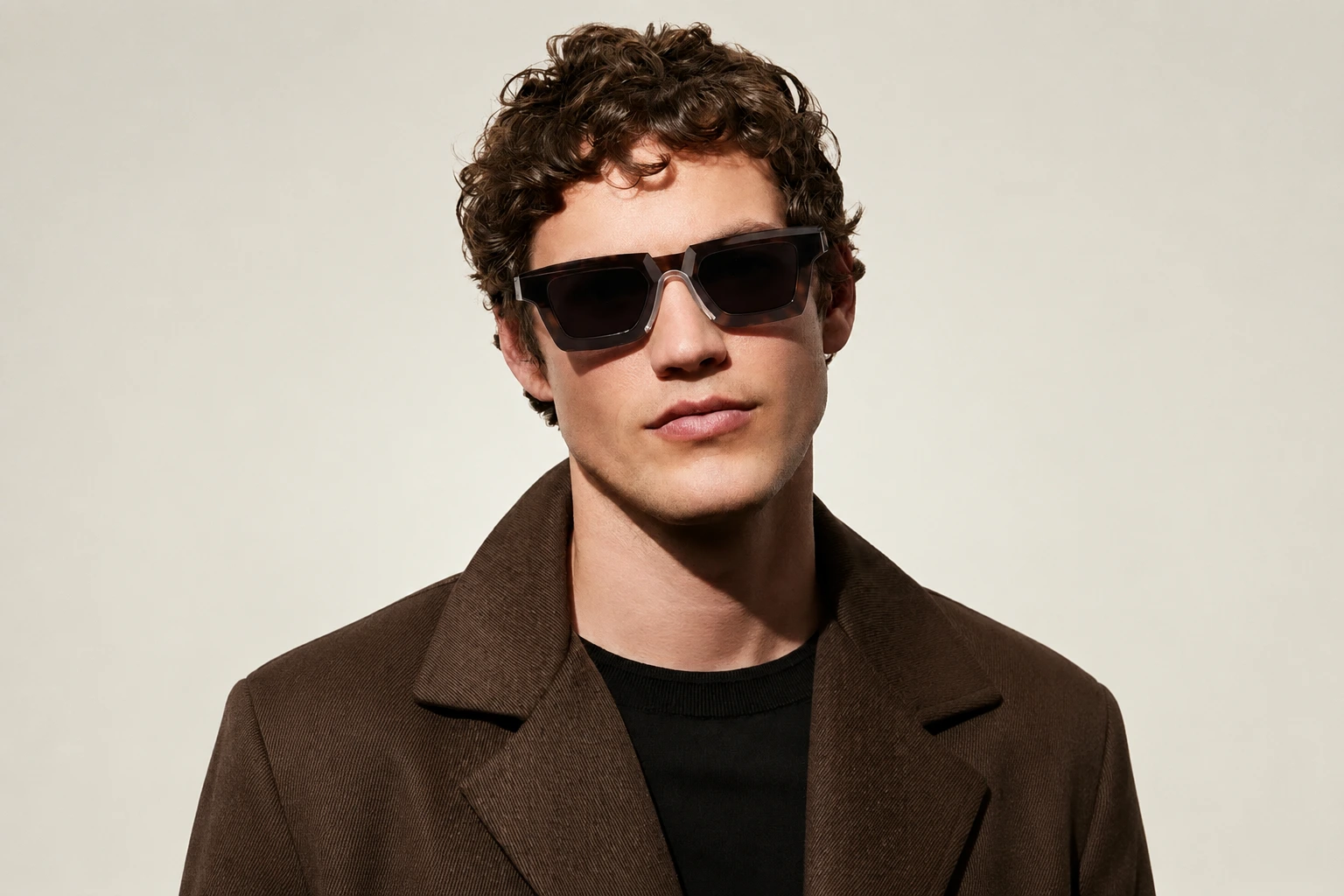
Gotowa para okularów wygląda prosto na półce. Proces produkcyjny taki nie jest. Oprawka przechodzi przez etapy projektowania, obróbki, próbkowania, wykańczania, montażu, kontroli, pakowania i wysyłki. Niewielka zmiana szerokości mostka lub położenia zawiasu może wpłynąć na kilka późniejszych operacji.
Próbkowanie nie powinno zaczynać się od słów „zrób tak jak na zdjęciu”. Fabryka musi mieć wystarczająco dużo szczegółów, aby ocenić, czy projekt można powtórzyć, a nie tylko wyprodukować raz.
Punktem wyjścia może być plik CAD, szkic, ramka odniesienia lub obraz z adnotacjami. Fabryka nadal potrzebuje wymiarów, materiału, rodzaju soczewki, konstrukcji zawiasów, metody wykonania logo, kolorów, rynku docelowego i wielkości zamówienia.
Projekt może wyglądać na wyważony na ekranie i źle leżeć na twarzy. Zmiana mostka o 1 mm może wpłynąć na komfort bardziej niż oczekiwano. Zazwyczaj przed obróbką inżynierowie sprawdzają szerokość soczewki, szerokość mostka, długość zausznika, krzywiznę przednią, grubość oprawki i rozstaw zauszników.
Drukowane znaki, grawerowanie laserowe, metalowe tabliczki i osadzone dekoracje również wykorzystują różne procesy i tolerancje.
Fabryka weryfikuje wymagania dotyczące formy, dostępność materiałów, minimalne zamówienie, koszty narzędzi i czas realizacji.
Niektóre projekty wymagają korekty. Cienka oprawka z octanu może pęknąć podczas montażu soczewek. Dekoracyjny element metalowy może powodować słabe spawanie. Ostry profil zauszników może nierównomiernie się polerować. Lepiej rozwiązać te problemy przed rozpoczęciem produkcji.
Etap próbki to moment, w którym rysunek zaczyna przypominać produkt. Na tym etapie można jeszcze poprawić najkosztowniejsze błędy.
W przypadku nowego modelu fabryka przygotowuje oprzyrządowanie lub modyfikuje istniejącą formę. Dokonuje się wyboru materiałów, formuje komponenty, a następnie montuje prototyp z zaplanowanym wykończeniem, logo, osprzętem i soczewkami.
Octan może wymagać cięcia CNC, polerowania, polerowania i dopasowania soczewek. TR90 w dużej mierze zależy od dokładności formy i chłodzenia. Metalowe oprawki wymagają starannego spawania i wyrównywania.
Pierwszy egzemplarz rzadko jest idealny. Powlekany front może się lekko wygiąć. Zauszniki mogą się otwierać zbyt szeroko, ponieważ kąt zawiasu pochodzi z grubszej oprawki. Te problemy ujawniają słabe punkty przed rozpoczęciem produkcji masowej.
Zmierz oprawkę. Załóż ją. Złóż kilka razy. Połóż ją na płaskim stole i sprawdź, czy oba zauszniki leżą równo.
Kluczowe kontrole obejmują dopasowanie, ruch zawiasu, wyrównanie, kolor, wykończenie powierzchni, działanie soczewki, położenie logo i wagę. Komentarze powinny być konkretne. „Zmniejsz szerokość mostka o 1 mm” jest przydatne. „Zwiększ komfort” nie.
Po poprawkach, zatwierdzony egzemplarz staje się wzorem. Stanowi fizyczny punkt odniesienia dla produkcji i kontroli końcowej. Po zatwierdzeniu nie powinien już ulegać zmianom.

Zatwierdzenie nie oznacza natychmiastowego uruchomienia maszyn. Fabryka musi zabezpieczyć arkusz specyfikacji, zestawienie materiałów, referencje kolorystyczne, pliki z logo, ilość zamówienia, szczegóły dotyczące opakowania oraz plan dostaw.
Arkusze z octanu mogą się różnić w zależności od partii. Kolory powłok mogą się różnić między dostawcami. Kolory soczewek, które pasują do siebie w katalogu, mogą się różnić w świetle dziennym. Rezerwacja jednej partii materiału na całe zamówienie jest zazwyczaj bezpieczniejsza.
Próbkę przedprodukcyjną można również wykonać z rzeczywistych materiałów masowych, szczególnie gdy próbka sprzedażowa została wyprodukowana poza standardową linią produkcyjną.
Po zamrożeniu dokumentów i materiałów, produkcja przechodzi od indywidualnej uwagi do kontrolowanej powtarzalności. Każda jednostka powinna działać zgodnie z zatwierdzoną próbką, zachowując uzgodnione tolerancje.
Ramki z octanu są cięte, obrabiane maszynowo, wiercone, polerowane i mocowane do zawiasów. Ramki formowane wtryskowo są formowane, chłodzone, przycinane i wykańczane. Produkcja ramek metalowych obejmuje formowanie, spawanie, polerowanie i platerowanie.
Octan może się odkształcać pod wpływem nadmiernego ciepła. Elementy wtryskowe mogą się nierównomiernie kurczyć. Metalowe fronty mogą się przesuwać podczas spawania. Powłoka galwaniczna może ujawnić ukryte zarysowania.
Dobre zespoły produkcyjne dokonują pomiarów w trakcie produkcji. Przesunięcie wymiarów w pierwszych stu elementach to ostrzeżenie. Czekanie na montaż spowalnia i zwiększa koszty korekty.
Następnie oprawki przechodzą przez etap kolorowania, powlekania lub platerowania, nanoszenia logo, montażu zawiasów, dopasowania soczewek i regulacji.
Z daleka montaż wydaje się prosty. W rzeczywistości taki nie jest. Moment dokręcania śrub, napięcie zawiasów, kąt zauszników, faza soczewek i symetria frontu wpływają na końcowy efekt. Oprawka może wyglądać akceptowalnie, ale wydawać się tania, ponieważ jeden zawias jest mocniejszy od drugiego.
Operatorzy potrzebują zarówno złotej próbki, jak i arkusza specyfikacji. Jeden pokazuje wygląd, drugi definiuje mierzalne granice.
Kontrola jakości najlepiej sprawdza się jako seria małych decyzji. Wykrycie wady po polerowaniu jest tańsze niż znalezienie jej po zapakowaniu.
Punkty kontrolne zwykle następują po formowaniu lub obróbce, polerowaniu, powlekaniu, montażu i dopasowaniu soczewki.
Inspektorzy sprawdzają wymiary, symetrię, znaki na powierzchni, spójność kolorów, napięcie zawiasów, bezpieczeństwo śrub, kąt zauszników, dokładność logo i dopasowanie soczewek. Powtarzające się wady powinny skutkować korektą procesu, a nie tylko kolejnym sortowaniem.
Kilka ram z tą samą rysą w pobliżu zawiasu często wskazuje na wadliwe mocowanie. Napraw mocowanie. Ponowne polerowanie każdej ramki tylko ukrywa przyczynę.
Podczas kontroli końcowej porównuje się gotowe jednostki z zatwierdzoną próbką, arkuszem specyfikacji i standardem klienta. Elementy niezgodne są przerabiane, ponownie sprawdzane lub usuwane.
Zamówienia eksportowe mogą wymagać testów materiałów, wydajności soczewek, wytrzymałości mechanicznej lub etykietowania. Wymagania te należy potwierdzić przed produkcją, a nie po zamknięciu kartonów.
Suson zatrudnia w warsztacie dedykowanych inspektorów jakości, którzy przeprowadzają kompleksowe kontrole końcowe przed zapakowaniem produktu i przerabiają produkty niespełniające norm.
Zatwierdzone ramy są czyszczone i pakowane wraz z torbami, futerałami, ściereczkami, metkami, kodami kreskowymi, kartami z instrukcjami lub pudełkami prezentowymi. Linia pakowania musi zweryfikować model, kolor, ilość i akcesoria.
Opakowanie często powoduje nieoczekiwane opóźnienia. Spóźnione opakowanie celne lub błędny kod kreskowy mogą uniemożliwić dostarczenie gotowego produktu na półkę. Kartony główne wymagają zabezpieczenia, oznaczeń wysyłkowych i dokładnego spisu zawartości. Dostawa może być realizowana za pośrednictwem firmy kurierskiej, drogą lotniczą, morską lub spedytora wyznaczonego przez kupującego.
SUSON nie tylko obsługuje standardowe opakowania, ale także oferuje usługi dostosowane do indywidualnych potrzeb do pudełek, ściereczek czyszczących, łańcuchów, kodów kreskowych, metek i pudełek prezentowych. Procesy operacyjne obejmują również uzgadnianie harmonogramów wysyłek i kompleksowe śledzenie logistyki.
Przed zwolnieniem depozytu kupujący i fabryka powinni wspólnie omówić szczegóły handlowe i techniczne.
Lista kontrolna
Podpisana specyfikacja, zatwierdzona próbka i przejrzyste zamówienie zakupu są bardziej przydatne niż długa historia wiadomości.
Marki okularów kupują nie tylko oprawki. Kupują powtarzalność. Kontrolowany proces chroni dopasowanie, kolor, markę, czas wprowadzenia na rynek i marżę.
Doświadczony partner OEM/ODM dostrzega szczegóły, które wyglądają akceptowalnie w próbce, ale mogą nie być stabilne pod względem wielkości.
Niezawodna fabryka łączy projektowanie, narzędzia, próbkowanie, produkcję, kontrolę, pakowanie i obsługę eksportową bez utraty informacji między działami. SUSON wspiera oprawki optyczne na zamówienie i okulary przeciwsłoneczne od fazy koncepcyjnej, poprzez produkcję masową, aż po wysyłkę.
Gotowy, aby przekształcić swój pomysł na okulary w produkt gotowy do sprzedaży detalicznej?
Skontaktuj się z SUSON aby omówić Twoje niestandardowe oprawki optyczne, wymagania dotyczące próbek i plan masowej produkcji OEM/ODM.
Pytanie: Jak długo trwa pobieranie próbek okularów?
Wykonanie nowej, niestandardowej ramy może zająć kilka tygodni, ponieważ wymaga ona obróbki, wykończenia i poprawek.
Pytanie: Czym jest złota próbka?
Jest to ostateczna zatwierdzona próbka służąca jako punkt odniesienia w produkcji i kontroli.
Pytanie: Czy produkcja może się rozpocząć przed zatwierdzeniem próbki?
To możliwe, ale zaoszczędzone kilka dni może przerodzić się w znacznie poważniejszy problem związany z przeróbkami.
Pytanie: Dlaczego warto wykonać próbkę przedprodukcyjną?
Potwierdza, że materiały masowe i normalne metody liniowe mogą odtworzyć zatwierdzony projekt.