
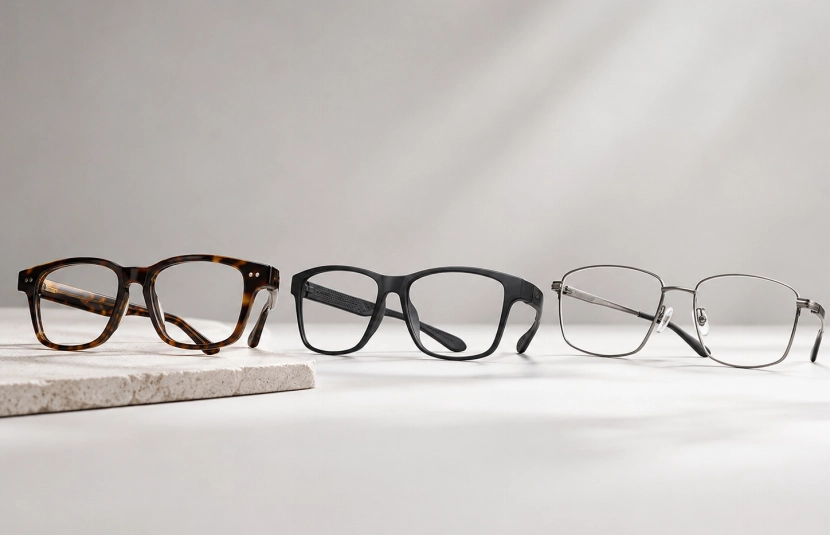
Elegir un material para el marco implica mucho más que solo atractivo visual. El material seleccionado da forma a la identidad general de su marca. También impacta en los gastos totales de producción. Finalmente, influye en la frecuencia de futuros problemas de servicio al cliente. Al observar monturas ópticas En cuanto a los materiales, generalmente se encuentran tres opciones principales: monturas de acetato, monturas de TR90 y monturas de metal. Es fundamental considerar el público objetivo específico y el precio de venta al público. En definitiva, el material debe coincidir con la colección de productos que se planea crear.
Determina el peso, el tacto, la flexibilidad, el acabado de la superficie y la comodidad a largo plazo.
Los materiales influyen directamente en el peso, la elasticidad, la textura de la superficie, la resistencia al impacto y la comodidad a largo plazo de las monturas de las gafas.
La elección del material también afecta a:
Un mismo diseño puede dar lugar a texturas y costes de adquisición completamente diferentes dependiendo de los materiales utilizados.
Este material ofrece una sensación más artesanal que los plásticos inyectados comunes. Es ideal para colores superpuestos, tonos transparentes, efectos degradados, estampados de carey y diseños de colores combinados.
Marcos de acetato Ofrecen un distintivo toque artesanal. Además, presentan transiciones de color más pronunciadas. Por ello, son ideales para estilos específicos. Entre las opciones se incluyen degradados, estampados de carey, lentes transparentes y bloques de color. Muchas empresas se centran en la moda moderna y el diseño exclusivo, y se dirigen a mercados minoristas de gama media y alta. Para estos negocios, las monturas de acetato suelen destacar mucho más.
Las monturas de acetato requieren un corte, pulido, ensamblaje y ajuste precisos. Un buen mecanizado CNC ayuda a mantener la forma de la montura estable. En una producción controlada, la precisión del CNC puede alcanzar aproximadamente ±0,1 mm, lo que garantiza una mayor uniformidad en el aro, las patillas, la posición de la bisagra y la zona de montaje de las lentes.
Las monturas de acetato suelen ser adecuadas para:
El TR90 es un material práctico. No pretende imitar el acetato. Su principal ventaja reside en su comodidad, flexibilidad y resistencia a los impactos.
Las principales ventajas del TR90 son su ligereza, flexibilidad y resistencia al impacto. Se puede afirmar que el TR90 es típicamente un 30% más ligero que el acetato, lo que lo hace más adecuado para gafas deportivas. gafas para niños, gafas de sol para exteriores y monturas ligeras para uso diario.
¿Por qué muchas personas eligen comprar gafas fabricadas con TR90?
El acetato es más adecuado para quienes buscan texturas visuales ricas, mientras que el TR90 ofrece un mejor rendimiento en términos de comodidad, flexibilidad y resistencia a los impactos.
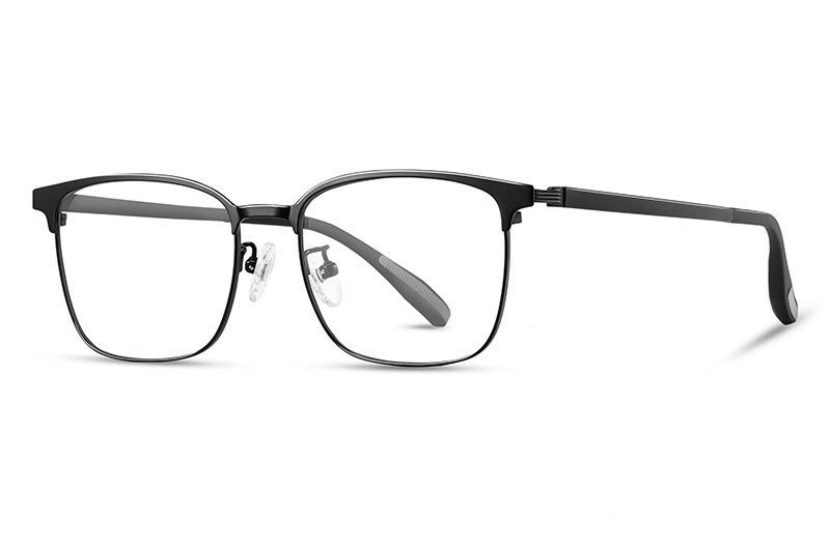
Las monturas metálicas aportan un lenguaje visual diferente. Son más finas, limpias y, a menudo, tienen un aspecto más profesional. El titanio y el acero inoxidable son dos opciones comunes en este grupo.
Marcos de metalDisponibles en titanio y acero inoxidable. Las monturas metálicas se caracterizan por su delgadez, ligereza y líneas depuradas, lo que las hace ideales para gafas de negocios de alta gama, estilo minimalista moderno y unisex. El titanio destaca por su ligereza y una sensación de calidad superior, mientras que el acero inoxidable resalta la estabilidad y el control de costes.
La montura puede parecer sencilla, pero los pequeños detalles determinan la experiencia de uso y la tasa de devoluciones.
Verifique estos puntos antes de realizar un pedido al por mayor:
El costo de los marcos metálicos depende del material, el tratamiento superficial, la estructura del marco y la complejidad del proceso. El titanio suele tener un precio más elevado. El acero inoxidable ofrece una estructura de costos más económica sin sacrificar la estética.
Cuando varios materiales pueden ajustarse a una misma línea de diseño, una simple comparación ayuda al equipo a tomar decisiones más rápidamente.
| Material | Fortaleza principal | Lo mejor para | Preocupación del comprador |
| Acetato | Colores intensos, tacto artesanal de primera calidad. | Gafas de sol de moda, monturas ópticas de lujo | Mayores costos de materiales y procesamiento. |
| TR90 | Ligero, flexible, resistente a los impactos. | Gafas deportivas, monturas para exteriores, gafas para niños | Textura menos prémium que el acetato |
| Metal / Titanio / Acero inoxidable | Aspecto delgado, limpio y moderno. | Monturas ópticas para negocios, colecciones minimalistas | Tratamiento de superficie y calidad de soldadura |
El material debe estar en consonancia con el estilo de venta de la marca. Una montura atractiva puede resultar decepcionante si no se ajusta a los hábitos de uso reales del usuario o a sus expectativas de precio.
Las monturas de acetato suelen ser la opción más segura para las líneas de moda. Permiten colores más intensos, estampados más llamativos y una identidad de diseño más visible. Si la marca necesita paletas de colores de temporada o un atractivo visual en las tiendas, el acetato ofrece mayor visibilidad.
El TR90 se adapta mejor a usuarios activos. Mantiene la montura ligera, flexible y más resistente a los impactos diarios. Para gafas de sol deportivas, gafas para actividades al aire libre, gafas infantiles o monturas de uso diario prolongado, el TR90 puede reducir muchas molestias.
Las monturas de metal, titanio y acero inoxidable se adaptan a colecciones minimalistas, profesionales y de líneas limpias. Son ideales cuando el producto debe transmitir una sensación de ligereza, delgadez y modernidad. El titanio es más adecuado para una imagen de alta gama, mientras que el acero inoxidable ayuda a controlar el coste.
Las marcas de gafas de sol y de óptica no deben fijarse únicamente en las fotos de estilo. Es necesario considerar el precio de venta al público objetivo, la edad del usuario, el canal de venta y el riesgo posventa antes de elegir el material.
Un buen briefing de muestra ahorra tiempo. Si la fábrica solo recibe una foto y una idea aproximada del tamaño, la primera muestra podría no cumplir con las expectativas. La información clara ayuda al fabricante a evaluar con antelación el material, la estructura, el coste y la viabilidad de la producción.
Antes de preparar las muestras, tenga a mano los datos básicos:
Suson Puede ayudarle a pasar de la selección de materiales al muestreo y la producción en masa. Cuando la dirección del producto esté clara, la fábrica puede recomendar estructuras de marco, opciones de color, métodos de logotipo, opciones de embalaje y planes de producción más adecuados.
Las monturas de acetato son ideales para la moda y un posicionamiento visual premium. Las monturas de TR90 son mejores por su ligereza, comodidad, uso deportivo y resistencia a los impactos. Las monturas metálicas se adaptan a colecciones ópticas empresariales, minimalistas y de alta gama. Seleccionar el material adecuado para la montura es fundamental. Esta elección ayuda a reducir los gastos de comunicación y garantiza un mejor ajuste para el producto final.
SUSON es su socio especializado en la fabricación de gafas OEM/ODM. Nos centramos en la creación de gafas de sol y monturas ópticas de alta calidad. Nuestro equipo está listo para satisfacer las necesidades específicas de su proyecto.
P1: ¿Cuál es el mejor material para las monturas de gafas?
El acetato se adapta a los estilos de moda, el TR90 a un uso ligero y el metal a las monturas ópticas de negocios.
P2: ¿Son mejores las monturas de acetato que las de TR90?
El acetato tiene un aspecto más prémium, mientras que el TR90 es más ligero, más flexible y mejor para un uso activo.
P3: ¿Es el TR90 adecuado para gafas deportivas?
Sí. El TR90 es ligero, flexible y resistente a los impactos, lo que lo hace adecuado para gafas deportivas y para actividades al aire libre.
P4: ¿Son las monturas metálicas adecuadas para las gafas de uso diario?
Sí. Las monturas metálicas son delgadas, elegantes y adecuadas para gafas de uso diario, especialmente para modelos de negocios.
P5: ¿Qué material de montura es el mejor para las gafas de los niños?
El TR90 suele ser una buena opción porque es ligero, flexible y más resistente a la flexión.